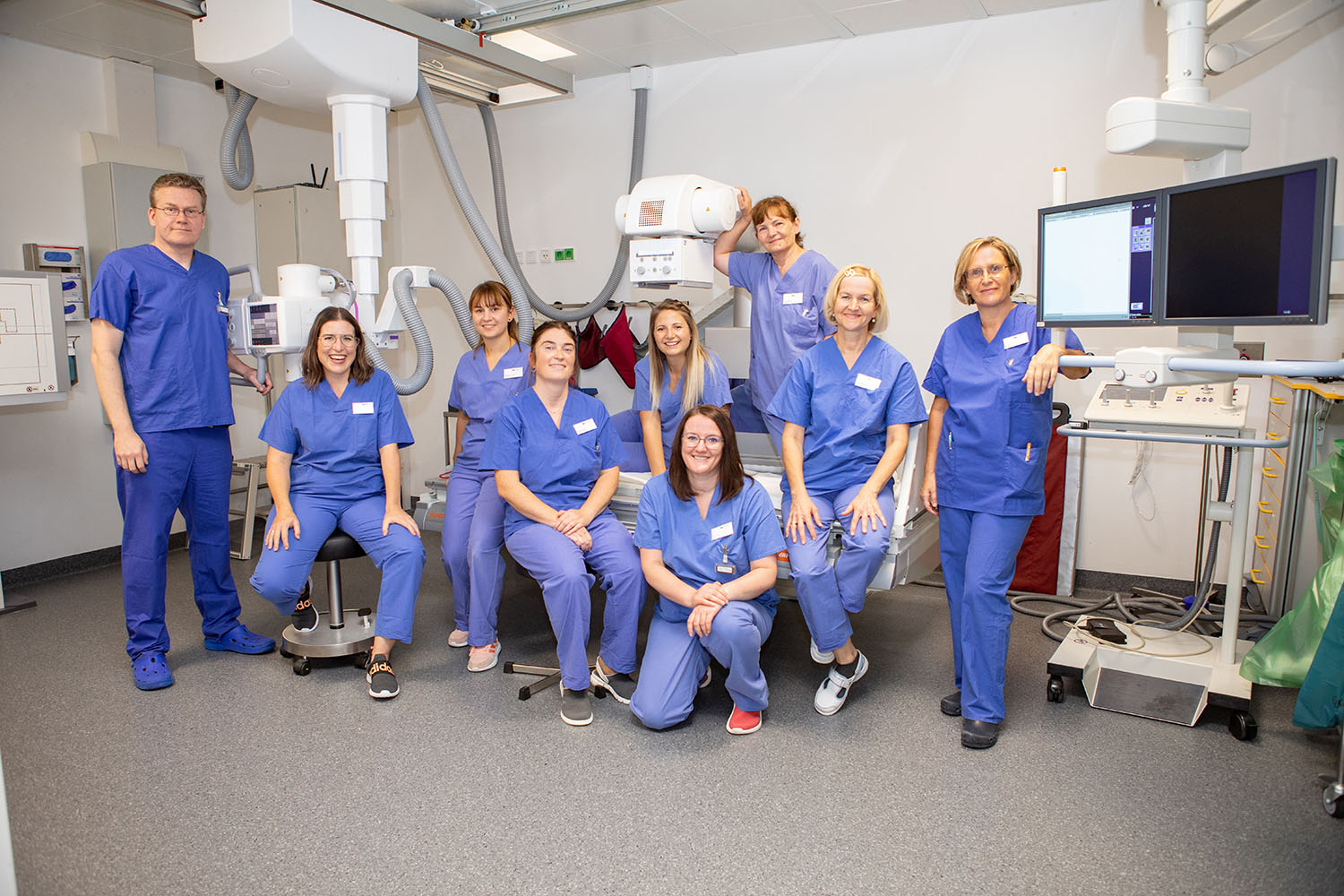
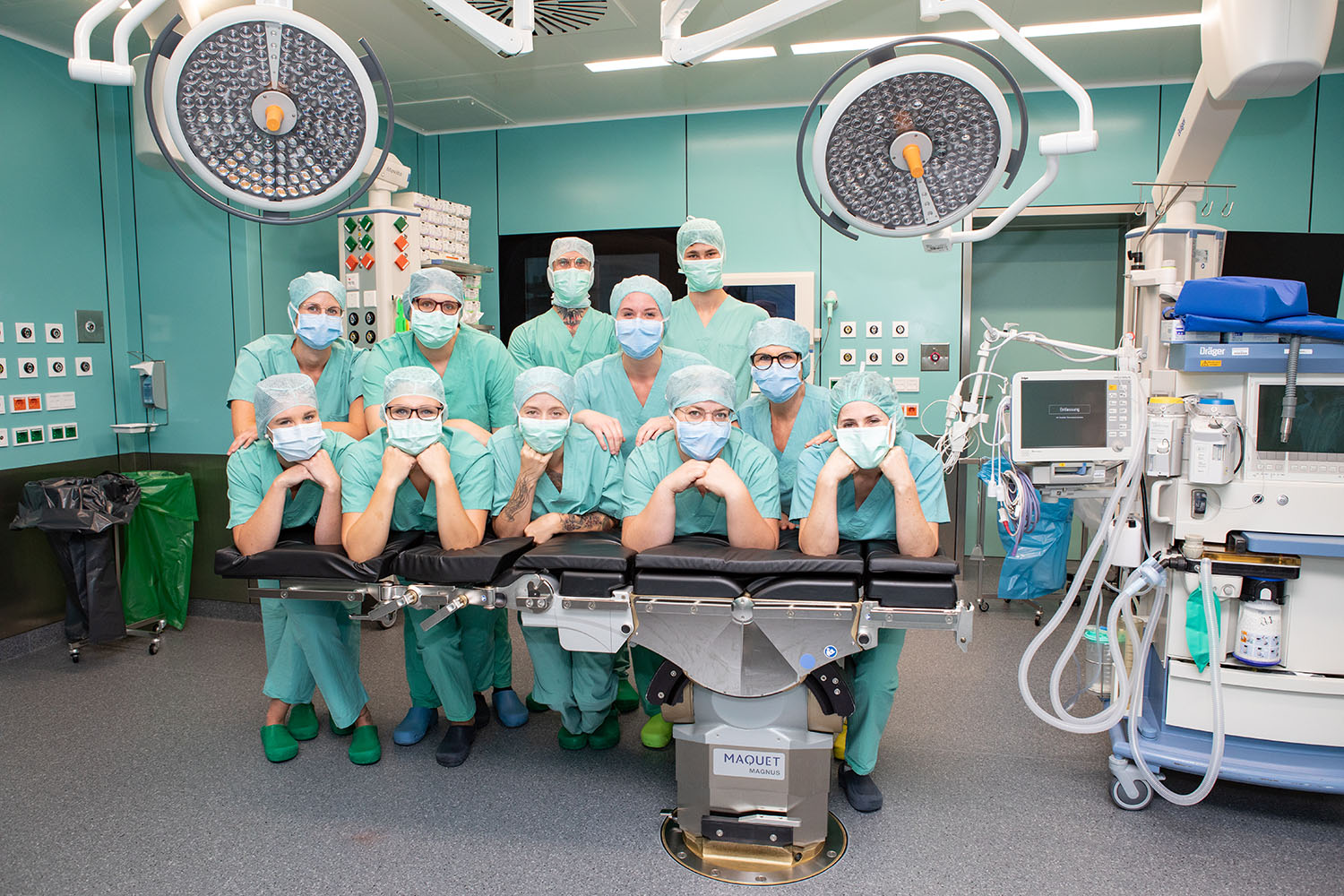
Training at the Arberlandkliniken - why?
This answer is easy for us: it is future-orientated, safe and brings added value to society. But above all, it is one thing for us: the best job in the world! We can save lives and bring smiles. Dry tears and develop superpowers. And all this often just between breakfast and lunch. With each other. For each other.
Sounds somehow unbelievable? Then convince yourself with a Internship or at the Federal Volunteer Service from our team!
If you need a few convincing arguments first, Let's talk about the facts for a moment:
Find the right
Find an apprenticeship
Nursing specialist (m/f/d)
Nursing Assistant (m/f/d)
Anaesthesia Technical Assistant (m/f/d)
Operating theatre assistant (m/f/d)
Medical assistant (m/f/d)
Medical technologist for laboratory analysis (m/f/d)
Management assistant in healthcare (m/f/d)
Cook (m/f/d)
IT specialist for system integration (m/f/d)
Medical Technologist for Radiology (m/f/d)
What trainees say about their jobs
Are you wondering what training at the Arberlandkliniken is really like? Take a look at what some of our trainees have to say.
Training at the Arberlandkliniken has many advantages & benefits
Structured & comprehensive familiarisation
In-house training
Regular trainee workshops
Travel costs for external training assignments
Youth & trainee representation
Open employee communication
Benefits not yet convinced? Then perhaps your colleagues
I like working at the Arberlandklinik in Zwiesel because of my good relationship with my colleagues and the good prospects for the future.
Selina Bernhauser
Nursing trainee
I really appreciate the family environment and I particularly like the fact that people know each other.
Lena Dick
Nursing trainee
I feel very comfortable in the family environment of the clinic and appreciate that my medical knowledge and interests are encouraged here
Anna Hobelsberger
Trainee in the lab
I like working in the laboratory at the Arberlandklinik Zwiesel, because there is a special family environment here
Lena Fruth
Trainee in the lab
I chose the MVZ Arberland because there are many different specialisms here and there is a good working atmosphere.
Ayleen Kunzewitsch
MFA trainee
I like working at the Arberlandkliniken because there is a great working atmosphere and good teamwork here.
Alexander Schmidt
Nursing trainee
At the Arberlandkliniken, I have the opportunity to utilise my skills and work with great colleagues.
Ben Zarham
Trainee business administrator in healthcare
Frequently asked questions
- Nursing specialist: either the Vocational Training Centre for Social Care Professions run by Mädchenwerk Zwiesel e.V., the Vocational School for Nursing and Care of the Elderly in Bad Kötzting, or the Bavarian Forest Nursing Academy in Grafenau
- Nursing Assistants: Vocational Training Centre for Social Care Professions run by Mädchenwerk Zwiesel e.V.
- Healthcare business administrators and medical assistants: Mathias-von-Flurl School, State Vocational School II, Straubing-Bogen
- Surgical Assistant or Anaesthesia Technician: Institute for Training, Further Education and Continuing Professional Development in the Healthcare Sector (e.V.) in Regensburg
- Medical Technologists in Radiology and Medical Technologists in Laboratory Diagnostics: Eckert Schools in Regenstauf
- Chefs: Hotel Vocational School in Viechtach
- IT Specialist for Systems Integration: Karl-Peter-Obermaier Vocational School in Passau
In total, we have around 100 apprentices at the Arberlandkliniken and seven at the Arberland Medical Care Centre (MVZ). The number of apprentices recruited each year per apprenticeship programme varies.
For all apprenticeship programmes except that for Medical Assistants (m/f/d), training takes place in blocks. For Medical Assistants (m/f/d), training takes place on a daily basis (1–2 days a week).
Your documents will be carefully checked by us. This may take some time, so please be patient.
After an interview, the final decision can take up to 3 weeks.
True to our motto "Together. For each other." it is important to us to ensure good communication within the team and with patients. For this reason, we require German language skills of at least level B1 (GKP recognised) for nursing staff and at least level B2 for nursing trainees.
Key points: B2 certificate with a grade of ‘good’ or ‘very good’, translation and recognition of certificates, CV, cover letter, application period: September to March for the coming training year)
Key points: Integration plan in place; support from colleagues and mentors; assistance with finding accommodation, dealing with the authorities and everyday life; language support


